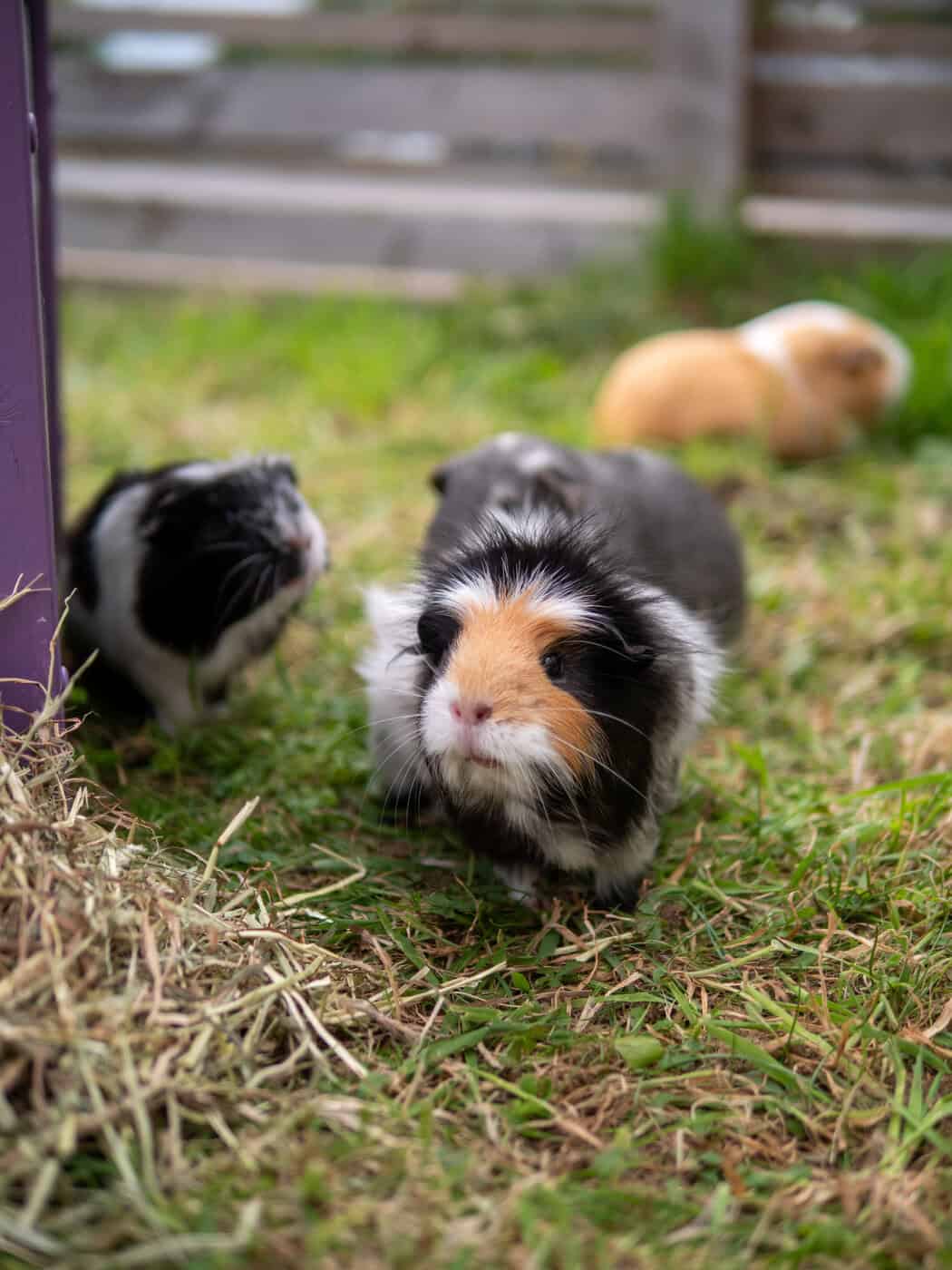
When the weather gets to 21 and above we need to start taking precautions with our Guinea Pigs. Find out how.
Published on
26th June 2026
Ways we can help our Guinea Pigs to stay cool during hot weather.
Guinea pigs originate from areas of South America, many of which have fairly stable temperatures, rather than extreme heat. They stay in sheltered areas such as dense grass, vegetation, or rock cover and avoid the hottest parts of the day.
Because of this, guinea pigs are not well adapted to high temperatures, and they are particularly vulnerable to heat. When the weather is hot, we must ensure they can stay cool and avoid direct sun.
It is best to keep them in the environment they are used to and adapt that space to cope with the heat. However, if temperatures rise too much, you will need a plan B and somewhere cooler to move them during the hottest parts of the day, such as a shaded spare room, or a garage that stays cool and does not receive direct sun.
🌡️ Temperature guide for guinea pigs
As a general rule, guinea pigs begin to struggle in warmer temperatures and are at risk much sooner than rabbits.
| Temperature | Risk level |
| 15–20°C | ✅ Ideal range |
| 21–24°C | ⚠️ Start taking precautions |
| 25–27°C | 🚨 Increased risk—active cooling needed |
| 28°C+ | ❗ Dangerous—high heatstroke risk |
👉 Start monitoring closely from 24–25°C, and take action early.
Older or unwell guinea pigs are more vulnerable, so always plan ahead, check the forecast, and have cooling measures ready. You will need an electric thermometer to place in their living area so that you can monitor the temperature closely. You can even get digital thermometers that alert your phone if they go above (or below for winter) a preset temperature.
🌤️ Shade and airflow
Shade and airflow are essential for keeping guinea pigs cool.
- Outdoor guinea pigs should have full shade during the hottest parts of the day
- Use sun shades or covers, but ensure good ventilation
- Avoid trapping warm air, always leave space for airflow
For indoor guinea pigs:
- Keep curtains or blinds closed during peak heat
- Only open windows when it cools down (e.g. evening/night), ensuring it’s safe
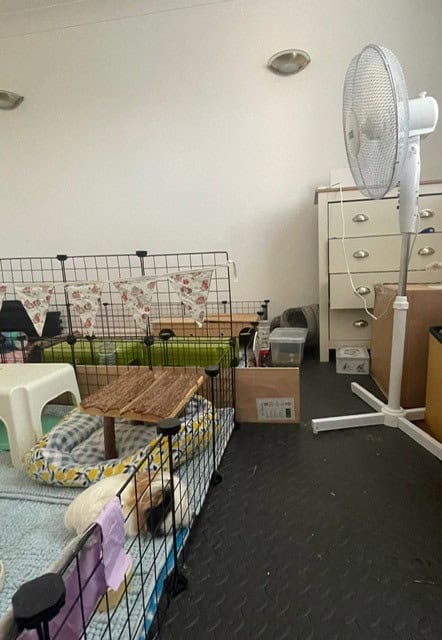
- Fans might create more dust from the hay so make sure you open windows when it cools down to create fresh air
❄️ Cooling aids
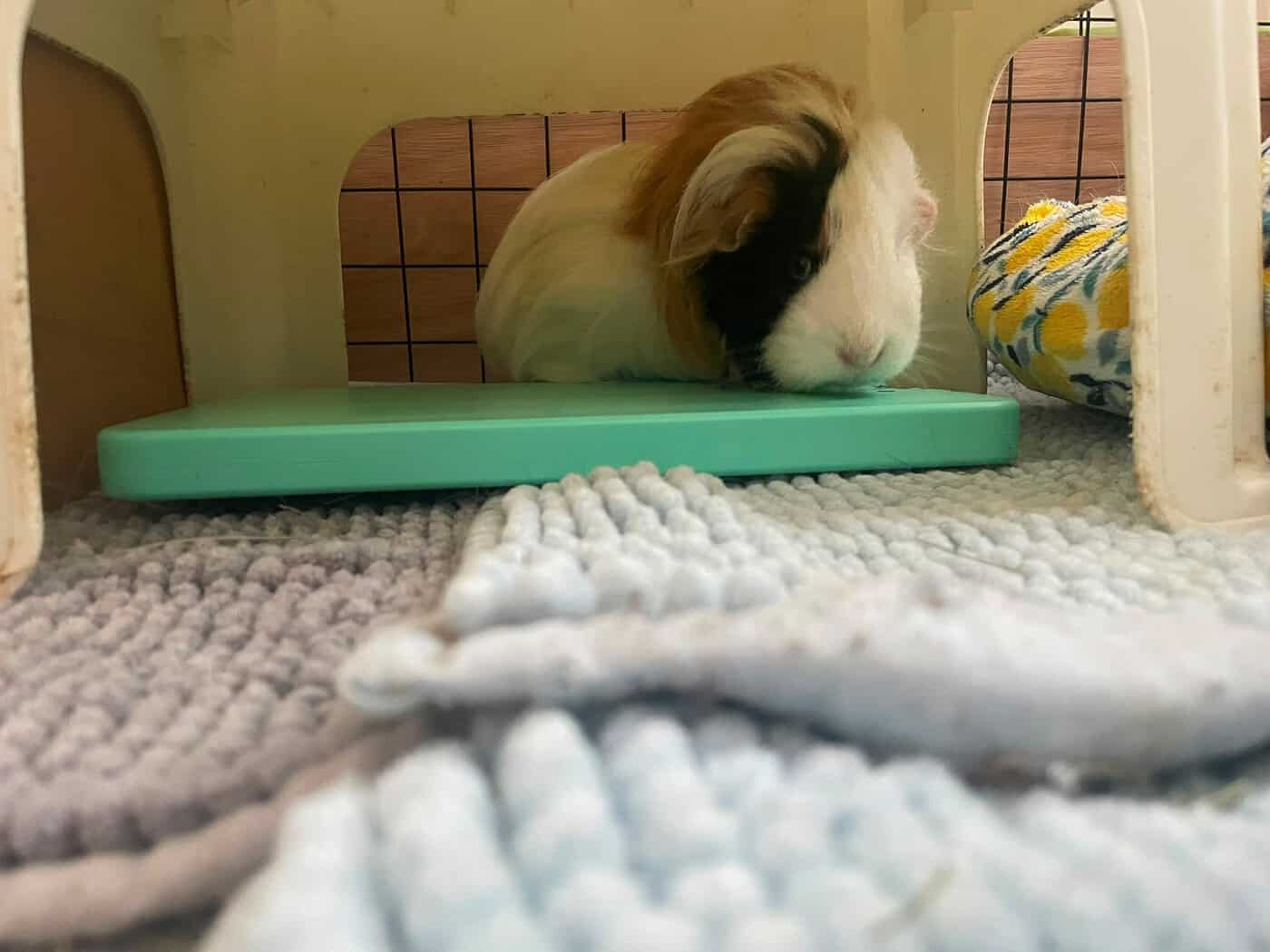
There are commercially available ‘cooling pads’ available now, and our Guinea Pigs love them and have been lying on them during the 2026 heat wave. However, you can create your own cool pod by filling a bottle (e.g. a 1L juice bottle) with water, freeze it, wrap it in a towel, and place it nearby so guinea pigs can lie next to it.
- Rotate bottles as they thaw
- Never place directly on skin without a cover
You can:
- Use a fan aimed at the frozen bottle to circulate cooler air
- Use portable air cooling units if available
⚠️ A fan on its own won’t cool the air, only move it, so always combine with a cooling source.
⚠️ Ensure wires are protected from chewing, use rechargeable units where possible.
🧊 Cool surfaces
Provide a cool place to lie down, such as:
- Ceramic or marble tiles
- A shaded grass area (natural grass stays cooler than artificial surfaces)
- A ‘cooling pad’, but make sure that they don’t nibble them!
Avoid:
- Artificial grass or plastic surfaces, which can become very hot
💧 Body cooling
- You can lightly dampen a cloth and place it nearby for cooling
- Unlike some animals, guinea pigs should not be bathed or soaked
- Do not apply water directly in a way that could stress them or cause chilling later
- Trim any long hair, particularly around their back end to help them stay cool and allow air to circulate
🥬 Eating and drinking
Heat can reduce appetite, but it is vital that guinea pigs keep eating.
- Offer favourite foods such as:
- Fresh grass
- Herbs
- Safe leafy greens
- You can rinse vegetables in water before feeding to increase hydration
Hydration is critical:
- Provide fresh, cool water at all times, ideally in heavy ceramic bowls
- Offer water in multiple locations
- Refresh frequently so that is stays cool
- If you use water bottles too cover them so that the water does not get hot.
❌ Avoid:
- Adding sugary substances (e.g. fruit juice) to water
- Ice cubes or very cold water
- Frozen food (can cause digestive issues)
✅ Do’s and Don’ts
✅ Do:
- Provide full shade and good airflow
- Use frozen bottles wrapped in towels
- Offer cool resting surfaces
- Check them frequently, especially above 24–25°C
- Encourage eating with familiar, safe foods
- Have a backup cool location ready
- Provide fresh, cool water in multiple bowls
❌ Don’t:
- Add ice to water or feed frozen foods
- Bathe or soak guinea pigs
- Use suncream—they may ingest it
- Trap hot air in their enclosure
🛒 Simple shopping list
- Digital thermometer (to monitor temperature)
- Sun shade / parasol
- Fan or small air conditioning unit
- Empty 1 litre (or larger) bottle to fill with water and freeze, or cooling pod
- Towel to wrap frozen bottle in
- 2 ceramic water bowls (to prevent tipping and keep water cooler)
- Their favourite fresh foods
🚨 Watch for signs of heatstroke
- Panting or open-mouth breathing (emergency)
- Rapid breathing
- Lethargy or weakness
- Drooling or wetness around mouth
- Lying stretched out and unresponsive
🚑 Emergency action
- Move the guinea pig to a cool, shaded area immediately
- Offer cool (not cold) water
- Use cool, damp cloths nearby (not wrapped tightly)
- Contact a guinea pig–savvy vet immediately—heatstroke can become fatal very quickly
- 🐾 Final note
- If you’re feeling too hot, your guinea pigs will be too, often more so, as they cannot regulate their body temperature as effectively. Planning ahead with a few simple items can make a significant difference to their comfort and welfare.
Latest articles & advice
Find out more